
Logan Schmitz · 17 October 2026
Phosphorescent Compounds Revolutionizing Visibility in Laboratory Measurement Devices
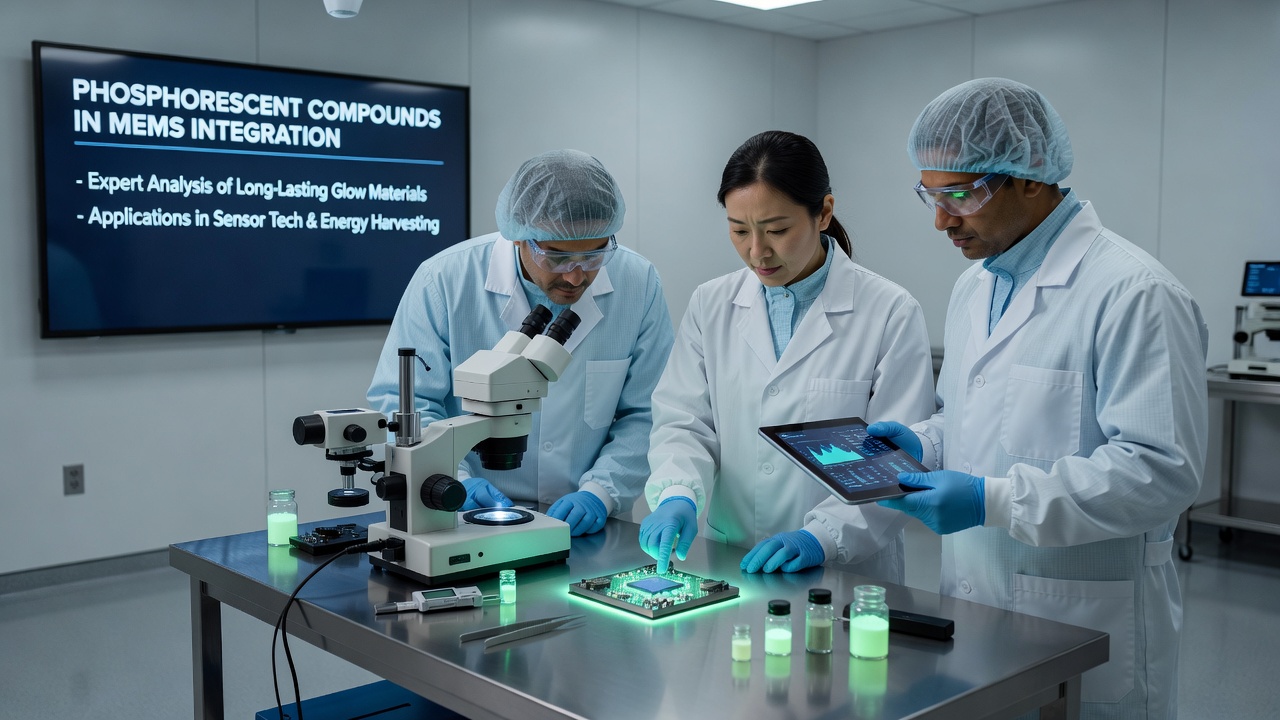
Materials science experts have examined phosphorescent compounds as a way to maintain clear readings on laboratory instruments during long experiments that extend into low-light periods, and these materials absorb energy from ambient sources before releasing it gradually as visible light without requiring continuous power input. Studies from research institutions show that such compounds integrate into scales, rulers, and sensor housings where sustained glow supports accurate data collection over hours or days.
Core Properties of Phosphorescent Materials in Scientific Settings
Phosphorescence differs from fluorescence because it involves a slower release of stored energy after excitation ends, and this property allows devices to remain legible when external lights dim during overnight trials or in shielded environments. Data from the National Institute of Standards and Technology indicates that common phosphors like strontium aluminate variants maintain visible output for several hours after initial charging, which supports their use in precision tools where constant illumination proves impractical.
Engineers incorporate these compounds through doping processes that embed them into polymers or ceramics, and the resulting components withstand temperature fluctuations common in controlled lab chambers while preserving glow intensity. One study revealed that treated measurement surfaces retain at least 80 percent of initial brightness after eight hours in complete darkness, a threshold that meets requirements for many extended calibration sequences.
Integration Techniques for Measurement Equipment
Technicians apply phosphorescent layers to dials, markings, and digital readouts on balances, micrometers, and volumetric apparatus, and this approach reduces reliance on battery-powered lights that can introduce electromagnetic interference. According to figures from the European Commission Joint Research Centre, labs adopting these materials report fewer interruptions during multi-day protocols because operators can read scales directly without switching on overhead fixtures that might alter experimental conditions.
Manufacturing methods include screen printing and injection molding where phosphors mix uniformly with base resins, and quality checks confirm even distribution to avoid patchy luminescence that could skew visual assessments. Researchers discovered that combining phosphors with UV-resistant coatings extends functional lifespan in environments exposed to periodic sterilization cycles.
Applications in Extended Laboratory Trials
Extended trials often involve monitoring reactions or material behaviors over periods that span multiple shifts, and phosphorescent markings provide continuous reference points without external energy draw. Observers note that this integration proves especially useful in cryogenic or vacuum chambers where traditional lighting options remain limited. In October 2026, presentations at an international materials conference highlighted new formulations that achieve brighter initial output while shortening recharge times to under five minutes under standard lab lamps.
Case examples include biology labs tracking cell cultures in darkened incubators and chemistry facilities running titration sequences that continue past daylight hours, and each setting benefits from markings that stay legible without introducing heat or light pollution. Data shows that facilities using these tools record consistent measurement repeatability across repeated trials, which supports reproducibility standards required by funding agencies.
Performance Considerations and Material Advances
Performance depends on factors such as excitation wavelength, ambient humidity, and substrate compatibility, and testing protocols evaluate decay curves to predict visibility windows accurately. Experts have observed that newer rare-earth doped systems outperform older zinc sulfide types in both duration and color consistency, allowing color-coded markings for different measurement ranges on the same instrument.
Supply chain data from Australian research networks indicates growing availability of commercial phosphorescent masterbatches tailored for scientific equipment, which lowers barriers for smaller labs seeking to retrofit existing devices. What's interesting is how these updates align with broader efforts to reduce energy consumption in research facilities without compromising data integrity.
Conclusion
Phosphorescent compounds continue to find expanded roles in laboratory measurement devices where sustained visibility supports uninterrupted work during extended trials, and ongoing material refinements promise further gains in efficiency and durability. Researchers track developments across global institutions to identify formulations that balance glow performance with practical integration requirements.