David Flores · 3 October 2026
Adapting Luminescent Compounds for Precision Timing in High-Stakes Industrial Calibrations
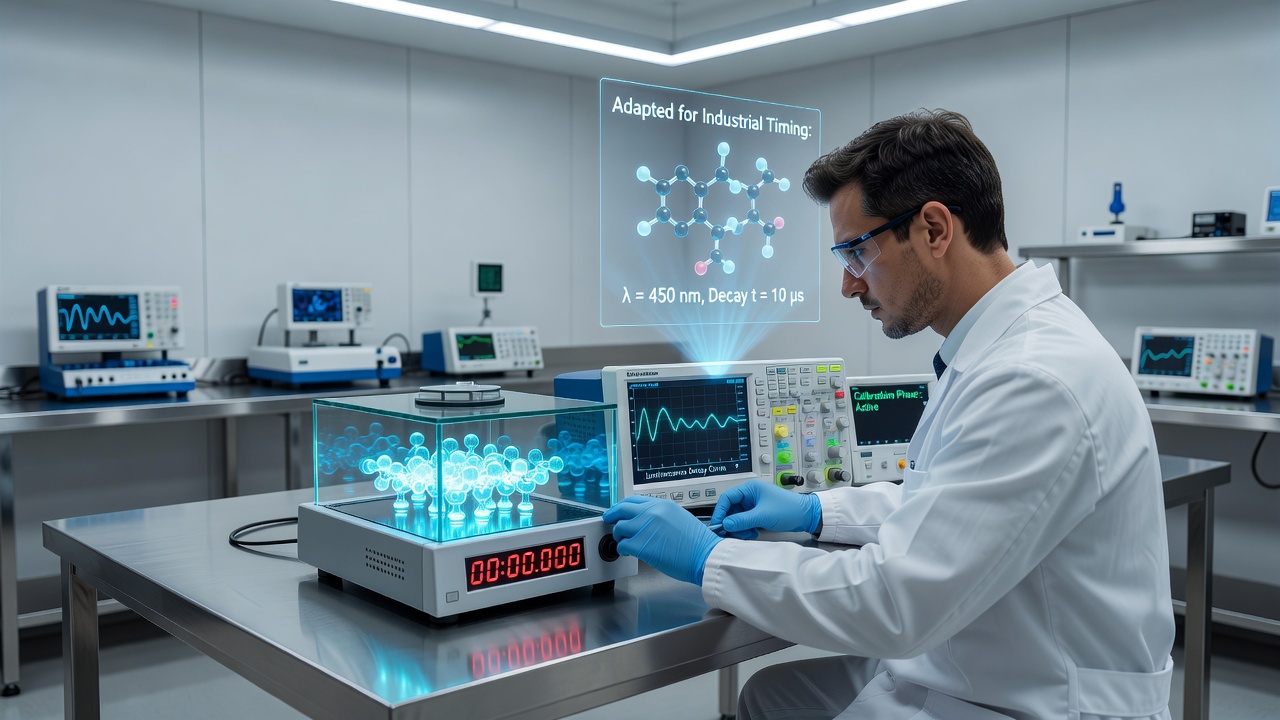
Industrial sectors that demand exact measurements rely on luminescent compounds because their light emission decay rates provide reliable timing references that function without external power sources in many cases. Researchers have refined these materials over recent decades to match the tolerances required in aerospace component testing, pharmaceutical production lines, and energy plant monitoring systems where even small timing deviations can affect safety protocols and output quality.
Core Mechanisms Behind Luminescent Timing
Luminescent compounds emit photons after excitation and the duration of that emission follows predictable patterns that scientists measure with high-resolution detectors, while the rate of decay depends on molecular structure and environmental conditions such as temperature and pressure. Engineers adjust doping levels and host matrices to stabilize these rates so that the compounds deliver consistent performance across repeated calibration cycles in controlled laboratory settings and field deployments alike. Data from the National Institute of Standards and Technology shows that optimized formulations achieve timing precision within microseconds under industrial vibration loads.
Adaptation processes often begin with selecting base materials like strontium aluminate or europium-doped variants, then proceed through iterative testing that evaluates emission spectra and thermal stability. Teams combine these compounds with sensor arrays that convert light signals into digital timestamps, creating hybrid systems that integrate seamlessly with existing calibration software used in high-volume manufacturing environments.
Industrial Applications and Recent Developments
Calibration routines in turbine blade inspection use luminescent markers to track rotational speeds and alignment checks, whereas chemical processing plants apply similar compounds to verify flow meter accuracy during continuous operations. Observers note that these adaptations reduce downtime because the materials operate passively and require minimal maintenance compared with electronic timers that can fail under extreme conditions.
In October 2026 several research groups shared updated protocols for scaling production of temperature-resistant luminescent blends that maintain decay consistency between minus 40 and plus 200 degrees Celsius. Those protocols draw from collaborative work across North American and European laboratories where joint trials confirmed extended service life under cyclic stress tests.
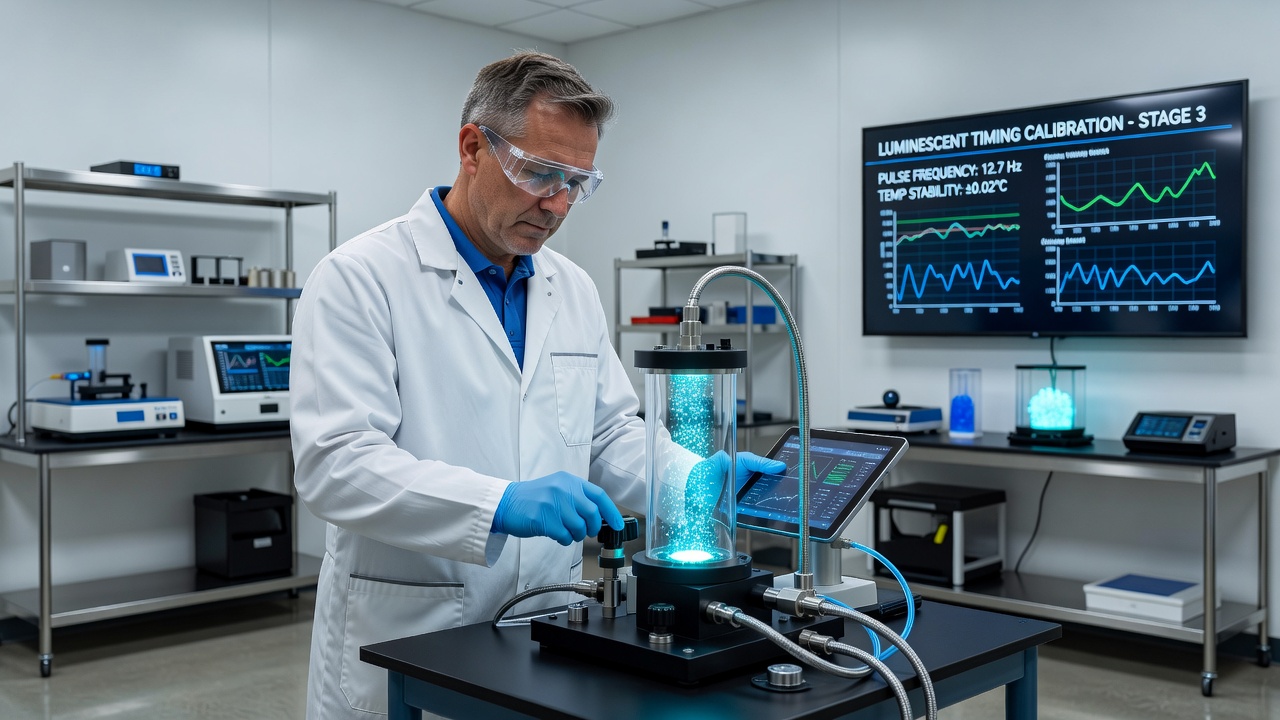
One study revealed that incorporating nanoscale encapsulation layers protects the compounds from moisture ingress, a common issue in outdoor pipeline monitoring stations. Engineers have since incorporated these layers into commercial sensor housings that now appear in Canadian oil extraction sites and Australian mining equipment fleets.
Challenges in Material Adaptation
High-stakes environments introduce variables such as radiation exposure and chemical corrosion that can alter luminescent properties over time. Teams address these factors by screening candidate compounds through accelerated aging simulations that replicate years of service in weeks, and they document performance metrics to establish replacement schedules that align with regulatory inspection intervals.
Integration with digital control systems requires careful signal processing to filter ambient light interference while preserving the integrity of decay-based timestamps. Research indicates that machine learning models trained on emission datasets improve noise rejection rates, allowing the luminescent signals to serve as primary references even in brightly lit factory floors.
Future Outlook and Standardization Efforts
Standards organizations continue to develop reference benchmarks for luminescent timing devices, drawing input from industry consortia that represent aerospace, energy, and pharmaceutical sectors. These benchmarks specify test conditions and acceptance criteria that manufacturers must meet before deploying systems in regulated facilities.
Additional work focuses on expanding the range of detectable timing intervals from nanoseconds to hours so that the same material families can support both rapid cycle checks and long-duration process validations. European Union research programs have funded projects that explore bio-derived luminescent precursors as alternatives to rare-earth elements, aiming to secure supply chains while maintaining performance levels documented in earlier trials.
Conclusion
Adaptations of luminescent compounds continue to support precision timing needs across demanding industrial settings because their passive operation and measurable decay characteristics align with strict calibration requirements. Ongoing material refinements and integration techniques expand their utility while standardization efforts ensure consistent results that meet safety and quality expectations in multiple sectors.